If you own an estate in New Hope, preparing for sale is about far more than tidying up a few rooms and calling a photographer. In this market, buyers often notice condition, privacy, documentation, and presentation just as much as square footage. The good news is that with the right plan, you can reduce surprises, protect your timeline, and launch with confidence. Let’s dive in.
Why New Hope estate sales require more planning
New Hope stands out for its riverfront setting, historic character, arts culture, and steady visitor traffic throughout the year. That means your sale is not only about the home itself, but also about how the property feels from the moment a buyer arrives.
If your estate is in or around Solebury Township, you are also marketing to a buyer pool in a high-value area where owner occupancy is strong and median home values are elevated. In practical terms, that often means buyers are selective and expect both strong upkeep and clear records.
County-wide data also points to a competitive environment rather than a slow one. In March 2026, Bucks County saw 593 new listings, 590 new pendings, 424 closed sales, and an average 39 days on market, with a 98.9% sold-to-list ratio. For you, that means preparation still matters even when demand is healthy.
Start prep 6 to 18 months early
The biggest mistake many estate sellers make is starting too late. If you want a polished spring launch, your best move is to begin months in advance, especially if the property has acreage, older systems, water-management issues, or historic features.
National timing data points to the week of April 12 through April 18 as the strongest listing window in 2026, with more views, fewer days on market, and slightly stronger pricing than an average week. Combined with Bucks County’s spring momentum, that makes early preparation a smart strategy.
Build your timeline backward
A strong sale usually starts with the launch date you want, then works backward. This gives you enough time to inspect systems, gather records, complete repairs, and prepare the home for staging and media.
A practical estate-sale prep window often looks like this:
- 6 to 18 months out: assess condition, review records, plan improvements
- 4 to 6 months out: complete larger repairs, exterior work, and drainage fixes
- 2 to 3 months out: finalize staging plan, photography schedule, and listing strategy
- 2 to 4 weeks out: deep clean, refine landscaping, and prepare for showings
Reduce risk with inspections and records
Pennsylvania sellers must disclose known material defects before signing an agreement of transfer. The state disclosure form covers a wide range of issues, including the roof, basement, structural conditions, water and sewage systems, plumbing, HVAC, electrical, drainage, boundaries, and title-related concerns.
Pennsylvania law does not require you to conduct a separate investigation before selling. Still, a pre-listing inspection and records review can be very helpful because they may uncover issues early, when you still have time to address them on your terms.
Gather key documents before listing
Buyers of estate properties often want answers quickly. If you already have documentation organized, you can respond with confidence and keep momentum strong.
Focus on collecting:
- Roof and system service records
- Renovation and remodeling documentation
- Permits and approvals for completed work
- Well and septic records, if applicable
- Drainage or water-management repair history
- Property boundary or title-related documents
- HOA documents, if the property is part of an association
Check wells, septic, and water issues early
If your property uses a private well or on-lot septic system, do not leave those items for the last minute. Pennsylvania recommends annual well-water testing for total coliform bacteria, nitrates, total dissolved solids, and pH.
For septic systems, the state recommends routine pumping every 3 to 5 years and annual inspections, with records kept for design, installation, inspections, pumping, and repairs. In Bucks County, the Health Department handles permits for on-site sewage facilities and malfunction investigations, so having service records ready can help streamline buyer questions.
Review drainage and basement history
For riverfront or lower-lying properties, water management deserves special attention. New Hope Borough notes that stormwater runoff can contribute to lawn ponding and basement flooding, making grading, gutters, downspouts, and moisture history important parts of your pre-sale review.
This is not an area for guesswork. If you have addressed drainage in the past, organize those invoices and records now. If you have not, it may be worth evaluating the issue before listing photos and tours begin.
Verify historic district approvals
If your property is located in New Hope Borough’s Historic District, exterior work may require an extra review step. Before a zoning or building permit can be issued for certain exterior work, a Certificate of Appropriateness is required.
This review can apply to demolition, exterior reconstruction or changes, painting, exterior lighting, fencing, and other architectural landscaping features. If you are thinking about curb-appeal updates, verify approval requirements before work begins so your timeline stays intact.
Prioritize curb appeal with purpose
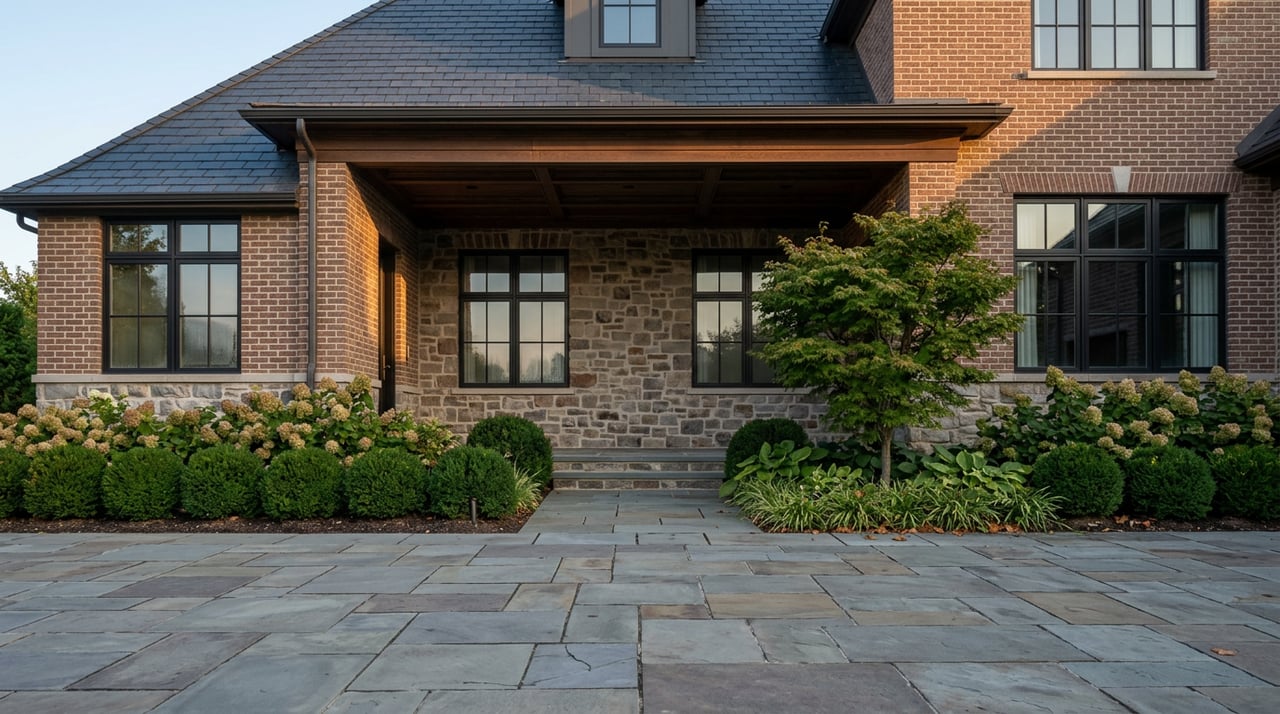
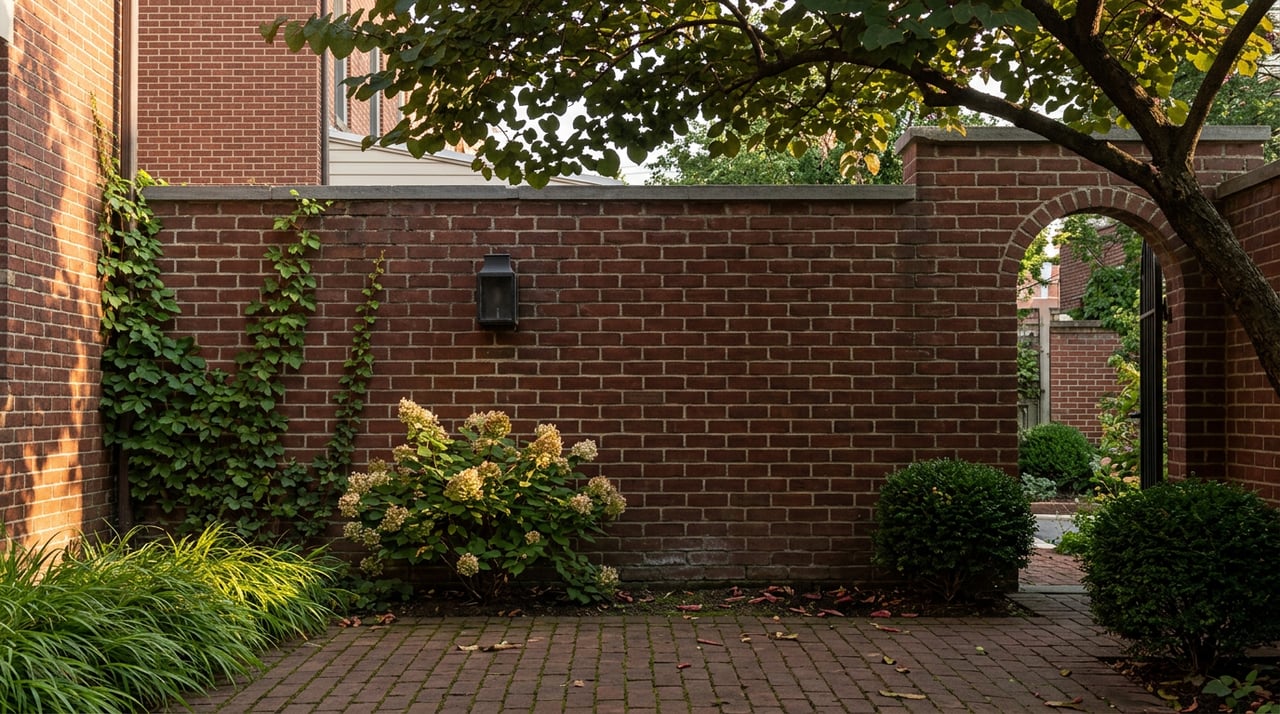
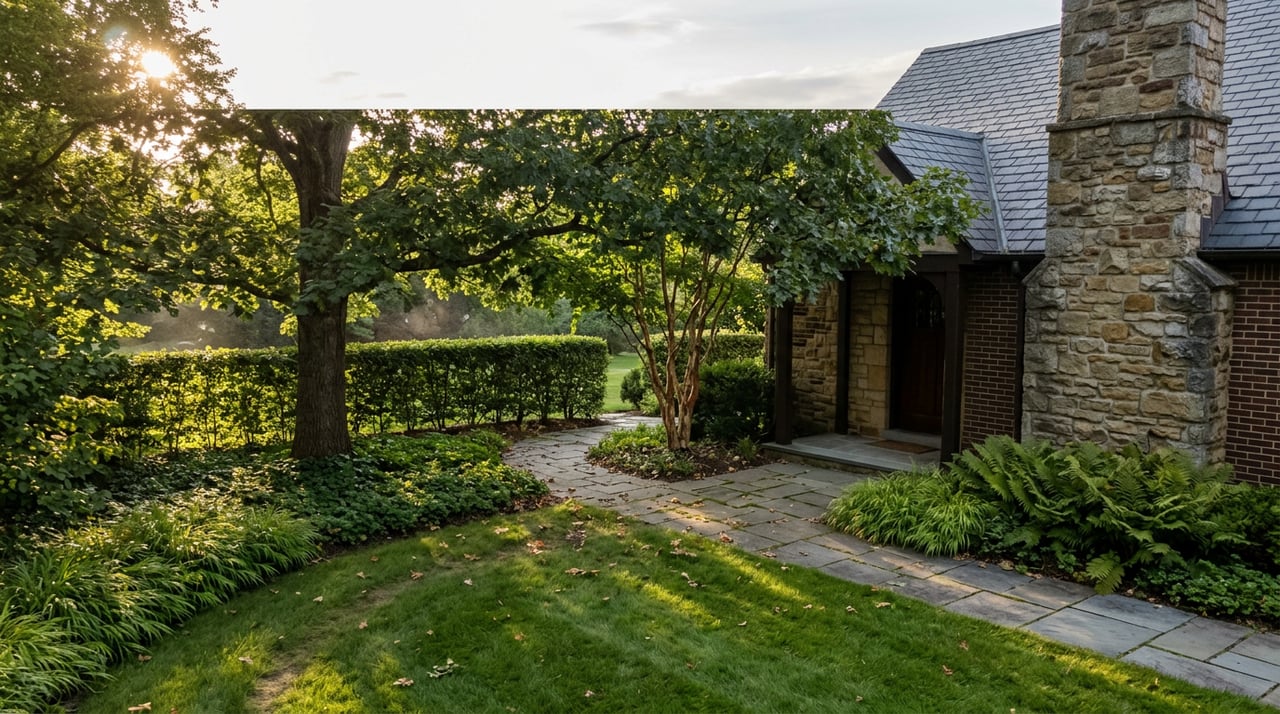
In New Hope, the setting is part of the value. The borough is known for the Delaware River, the Delaware Canal State Park, wooded corridors, and scenic views. That means buyers may respond strongly to how your grounds frame the experience of the property.
For estate homes, curb appeal should do more than look neat. It should create a clear sense of arrival, privacy, and visual calm.
Focus on the first impression
Before launch, review the approach to the home from the street or gate all the way to the front entry. Look for anything that distracts from the architecture or interrupts sightlines.
Key areas to review include:
- Driveway condition and edging
- Entry sequence and front-door presentation
- Tree trimming and view preservation
- Lawn health and seasonal plantings
- Outdoor lighting appearance and function
- Patio, pool, or terrace condition
- Visible gutters, drains, and grading issues
Stage for today’s buyer expectations
Staging is not just for vacant homes or smaller properties. According to NAR’s 2025 staging report, 83% of buyers’ agents said staging made it easier for buyers to visualize the home as a future residence.
The most commonly staged rooms were the living room, primary bedroom, and dining room. For an estate property, those spaces often set the tone for the entire showing experience.
Keep the look polished and believable
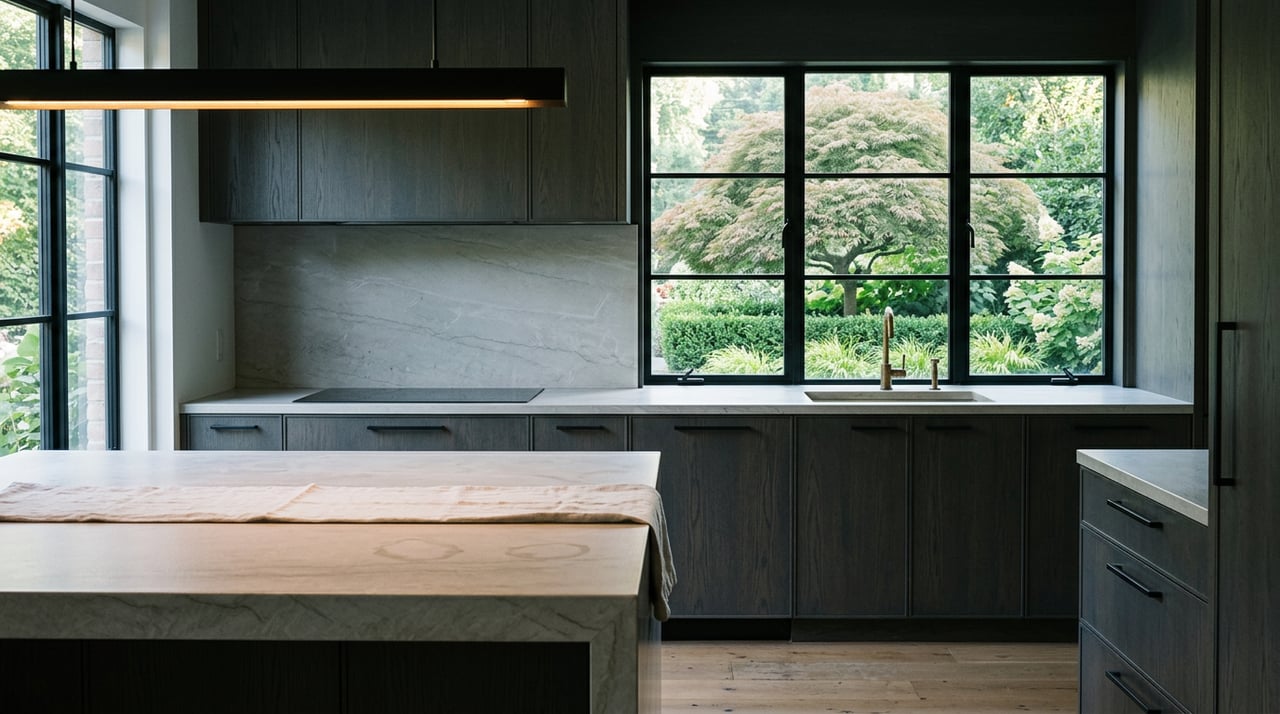
The goal is not to erase personality completely. The goal is to create a refined, cohesive presentation that helps buyers understand scale, flow, and how the home lives day to day.
A strong staging plan often includes:
- Simplifying oversized or highly personal decor
- Editing furniture to improve flow
- Highlighting natural light and views
- Defining large or flexible rooms clearly
- Styling key entertaining spaces consistently
- Preparing outdoor living areas as usable extensions of the home
Invest in high-quality listing media
In the luxury space, your digital first impression matters immensely. NAR reports that 81% of buyers consider listing photos the most important factor when evaluating properties.
That is especially important in a market like New Hope, where setting, architecture, and atmosphere are part of the appeal. If buyers are intrigued online, they will expect the in-person experience to match what they saw.
Use a full media plan, not just photos
NAR’s staging data also shows that buyers’ agents view photos, traditional staging, videos, and virtual tours as important. For estate properties, relying on one quick photo session often undersells the asset.
A thoughtful media strategy may include:
- Professional photography
- Video walkthroughs
- Virtual tours
- Exterior twilight imagery, if appropriate
- Ground-level and setting-focused visuals that show arrival, grounds, and outdoor living
If virtual staging or AI edits are used, they should be transparent and should never hide defects or misrepresent the property.
Price preparation and presentation together
Even in a competitive county-wide market, premium pricing is not automatic. Buyers in this segment are often experienced, equity-rich, and detail-oriented, and many are looking for homes that feel move-in ready.
That is why preparation and pricing work best as a pair. A well-prepared home with strong records, polished presentation, and a strategic launch is better positioned to justify attention and reduce friction during negotiations.
Questions buyers may ask before they offer
As your home comes to market, expect buyers to ask smart, property-specific questions. In New Hope, those questions often go beyond finishes and layout.
You should be prepared to address topics such as:
- Whether a pre-listing inspection was completed
- Any known water, drainage, or basement issues
- Flood-risk considerations for the property
- Well-water test results and septic records, if applicable
- Permit history for renovations or additions
- Historic district approvals for exterior changes, if applicable
The more clearly you can answer these questions, the more confidence you create.
A successful New Hope sale starts before listing day
The strongest estate launches rarely happen by accident. They come from early planning, disciplined preparation, and a clear understanding of what today’s buyers expect.
In New Hope, that means treating your home as a high-value asset that deserves both careful risk review and exceptional presentation. When you prepare the property, the records, and the marketing together, you give yourself the best chance to attract serious buyers and move through the sale with less stress.
If you are planning a move and want a tailored strategy for your New Hope estate, connect with Societe Plus Serhant for a polished, concierge-level approach to pricing, presentation, and launch.
FAQs
What should New Hope estate sellers do first before listing?
- Start with a full review of the property’s condition, maintenance records, and any likely repair or disclosure issues, ideally 6 to 18 months before your target listing date.
Do Pennsylvania home sellers need a pre-listing inspection?
- No. Pennsylvania does not require a pre-listing inspection, but it can help you identify issues early because sellers must disclose known material defects.
What records matter for a New Hope property with well and septic?
- Buyers will often want well-water test results, septic inspection and pumping records, and any design, installation, repair, or permit documentation tied to those systems.
Do historic district homes in New Hope need extra approval for exterior work?
- Yes. In New Hope Borough’s Historic District, certain exterior changes may require a Certificate of Appropriateness before related zoning or building permits can be issued.
Why does listing media matter so much for New Hope estate homes?
- Buyers often begin online, and strong photos, video, and virtual tours help communicate the property’s setting, scale, and condition before an in-person visit.
When is the best time to prepare a New Hope estate for sale?
- If you are targeting the spring market, begin months in advance so repairs, staging, records, and media are complete before buyer activity accelerates.