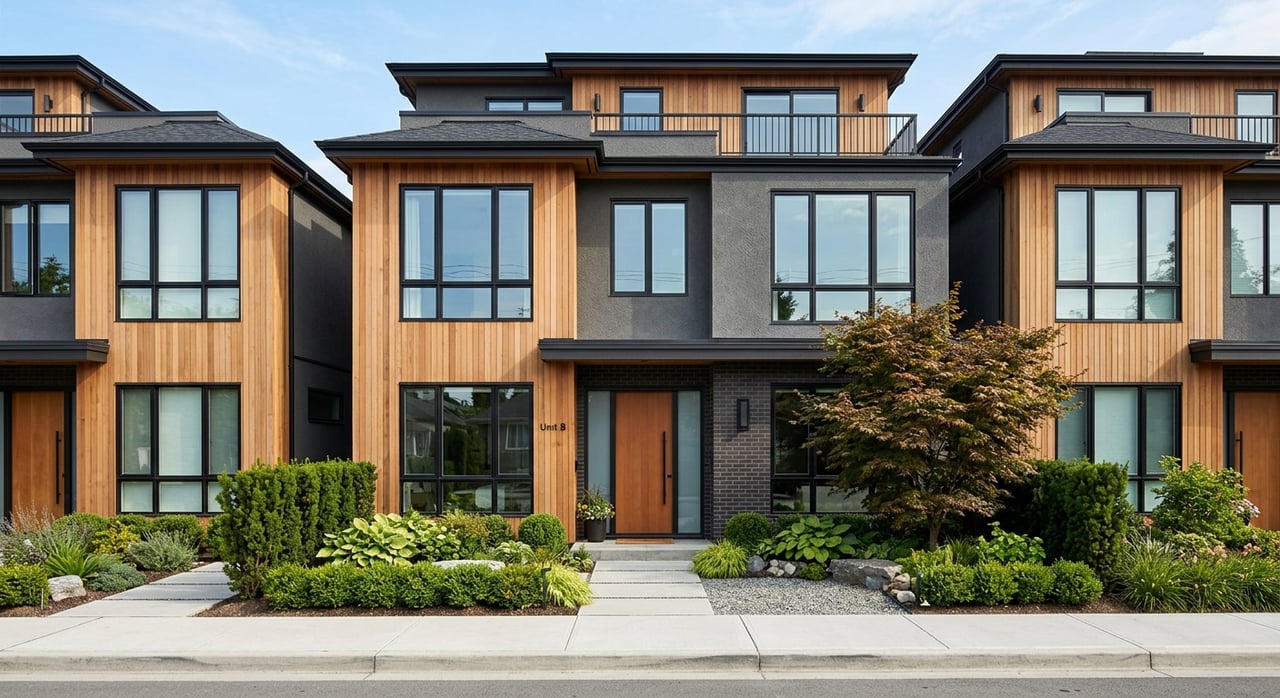
If you are bringing new construction to the Main Line, pre-selling can shape the entire success of your project long before the first move-in. In a place like Villanova, buyers are informed, selective, and often comparing design, finish level, layout, and long-term value rather than simply looking for the lowest price. That means your launch needs more than a listing date. It needs a strategy. Here is how to approach pre-selling in the Villanova corridor with the data, presentation, and sequencing today’s market demands.
Why Villanova Demands Precision
Villanova sits within one of the most affluent and highly educated buyer pools in the region. According to U.S. Census QuickFacts for Villanova, median household income is at or above $250,000, bachelor’s-or-higher attainment is 84.2%, and the median value of owner-occupied homes is $946,400. Nearby townships show similarly strong fundamentals, with Lower Merion and Radnor posting high incomes and high educational attainment as well.
For you as a developer, that matters because this buyer pool usually expects a polished product and a clear value story. In practical terms, buyers in this corridor are likely to weigh architecture, finishes, layout flexibility, commute convenience, and long-term positioning very carefully. Pre-selling works best when your project feels intentional from day one.
Read Absorption by Product Type
One of the biggest mistakes in new development is treating all demand the same. Recent Main Line market snapshots suggest the corridor is active, but absorption varies by property type and municipality.
In Lower Merion, a recent monthly market report showed detached homes with 34 active listings, 29 days on market, a median sold price of $1.3 million, and a contract ratio of 1.06 pendings per active listing. In the same period, attached and townhouse product showed 23 active listings, 16 days on market, a median sold price of $475,500, and a contract ratio of 0.57.
In Radnor, the same source showed detached homes at a median sold price of $1.255 million, with 13 active listings, 31 days on market, and a 1.54 contract ratio. Attached homes showed a median sold price of $526,000, 6 active listings, 20 days on market, and a 1.67 contract ratio.
The takeaway is not that one format always outperforms another. It is that you should release based on what the immediate submarket can absorb, not on a generic suburban playbook. These monthly reports are best read as recent snapshots, not permanent conditions, as Tri-County Suburban REALTORS® notes in its methodology.
Know Who You Are Selling To
A strong Villanova pre-sale strategy starts with the most likely buyer profiles. Based on local demographics and NAR’s 2025 generational trends report, the clearest audience is a mix of move-up households, downsizers, and some executive relocators.
Older buyers are often moving to be closer to friends or family and may want a smaller or lower-maintenance home. Younger households are more likely to be upsizing. In a market like the Main Line, that creates an important planning signal: your product mix should not rely on a single buyer type.
A smart release often includes:
- A family-oriented plan with three or more bedrooms
- Flexible office or guest space
- A downsizer-friendly plan with simpler day-to-day maintenance
- Clear finish packages that help buyers understand value quickly
When your floor plans align with how people actually live, your pre-sale program becomes easier to explain, market, and convert.
Price in Phases, Not in Theory
Luxury buyers are still active, but they are not buying carelessly. Redfin’s luxury report found that the typical luxury home took 64 days to sell in December 2025, while luxury prices rose 4.6% year over year. At the same time, Philadelphia was among the metros where luxury pending sales fell the most year over year.
That combination points to a clear lesson for Main Line developers: demand exists, but buyers are selective. If you push opening pricing to the highest possible number without testing market response, you risk slowing momentum early.
Instead, consider a staged pricing strategy built around:
- Initial release pricing tied to current local comparables
- Premiums only for true scarcity features
- Fast feedback loops from early showings and broker input
- Adjustments after the first wave of buyer response
This approach gives you room to discover where the market sees value. It also helps protect your absorption pace during the earliest and most visible part of the launch.
Build the Visual Package First
For pre-sales, presentation is not a finishing touch. It is the product before the product exists. That matters even more in Villanova, where buyers are highly digital and accustomed to polished information.
The Census profile for Villanova shows full computer and broadband access at the household level, and Lower Merion also reports very high digital connectivity. Meanwhile, NAR reports that buyers rank photos as the most useful online feature at 83%, followed by detailed property information at 79%, floor plans at 57%, and virtual tours at 41%.
That means your launch package should be complete before the first public release. At minimum, you should have:
- Photoreal renderings
- Measured floor plans
- Detailed finish and specification sheets
- Short-form video or motion content
- A model or spec-home visual sequence, if available
- Clear delivery timing and next-step information
If the first impression feels unfinished, buyers may assume the project is unfinished in deeper ways too. In a luxury-leaning market, confidence starts with clarity.
Treat the First 72 Hours as a Test Window
The first few days online carry outsized importance. According to NAR’s guidance on online visibility, early views, saves, and shares help determine whether a listing gains traction, and updating lead images or photo order can help reset attention if momentum slows.
For a Villanova pre-sale, that means your first 72 hours should be managed actively. Watch how buyers and agents respond to price, image order, floor plans, and messaging. If engagement stalls, it may be time to refine the presentation or release cadence rather than simply waiting.
This is where disciplined launch operations can make a real difference. A well-prepared team can treat early traffic as usable market feedback, not just passive exposure.
Lead With Brokers, Not Around Them
Even in luxury new construction, direct-to-builder sales are the exception. NAR’s 2025 report shows that 88% of purchases were made through a real estate agent or broker, while only 5% were purchased directly from a builder or builder’s agent.
That makes a broker-first rollout essential. If agents do not have the tools to explain your product clearly, your project loses momentum before it reaches the right buyers.
Your broker launch should include:
- Private preview opportunities
- Easy-to-share marketing sheets
- Clear commission and registration guidelines
- A prepared FAQ covering finishes, timing, maintenance or HOA assumptions, and upgrade paths
- Fast response systems for questions and showing requests
When the brokerage community understands the project, they can communicate it accurately and confidently to qualified buyers.
Use the Right Marketing Mix
Not every marketing channel carries the same weight during a pre-sale launch. NAR data shows that sellers working with agents most often used the MLS website, yard signs, open houses, agent websites, company websites, and third-party listing distribution. Social networking sites played a smaller role.
For your project, that suggests a practical hierarchy. Social media can amplify awareness, but it should support, not replace, the core launch infrastructure. Your strongest foundation is still broker distribution, MLS visibility, your project page, and well-organized digital assets.
A useful content stack for the Villanova corridor often includes:
- Exterior and interior visuals
- Floor plans and renderings
- Neighborhood and commute context
- School-district framing presented in neutral, factual terms
- A release calendar
- Short video clips for rapid sharing
The goal is not noise. The goal is fast, clear communication that helps qualified buyers understand the opportunity.
Position the Story Carefully
On the Main Line, hype tends to underperform substance. The strongest pre-sale narratives usually focus on scarcity, design quality, and how the project fits an established lifestyle market.
That is especially true in Villanova and nearby communities, where the demand base is financially strong and highly informed. Buyers do not need exaggeration. They need a reason to believe the product belongs in the market and offers something difficult to replace.
For many projects, the most credible story centers on one or more of these themes:
- Thoughtful infill or redevelopment
- Strong architectural identity
- A finish level that matches the price point
- Fit for move-up or downsizing demand
- Limited availability within a proven corridor
When the story is grounded in local market reality, the marketing feels more trustworthy and conversion tends to improve.
What Strong Pre-Selling Looks Like
A successful Villanova pre-sale is usually not the result of one tactic. It comes from alignment across product, pricing, visuals, broker strategy, and launch timing. In this corridor, buyers respond when the project is easy to understand, well presented, and priced with discipline.
If you are planning a Main Line launch, the advantage comes from preparation. With the right positioning, the right content, and a broker-centered rollout, you can create early confidence and build momentum before the project is fully delivered.
If you want a marketing partner who understands luxury positioning, local demand, and high-impact launch execution, connect with Societe Plus Serhant to discuss your Villanova or Main Line new development strategy.
FAQs
What does pre-selling new construction in Villanova mean for a developer?
- Pre-selling means securing buyer interest or contracts before a project is fully completed, using pricing strategy, renderings, floor plans, and launch marketing to build early momentum.
What buyer types are most likely to purchase Main Line new construction?
- Based on local demographics and national buyer trends, the most likely audiences are move-up households, downsizers, and executive relocators looking for quality design, layout flexibility, and convenience.
What pricing approach works best for Main Line pre-sales?
- A phased, data-led pricing strategy usually works best because it lets you test buyer response, protect early absorption, and reserve premiums for truly scarce features.
What marketing materials matter most for Villanova pre-sales?
- The most important materials are strong photography or renderings, detailed property information, floor plans, finish sheets, and virtual or video content that help buyers evaluate the home before completion.
Why should developers prioritize broker outreach for new construction launches?
- Broker outreach matters because most buyers still purchase through an agent or broker, so clear agent-facing tools and early previews can expand reach and improve conversion.